Search
× Search

Acid Reflux

Acid reflux or GERD occurs when gas, liquid or food particles in the stomach return back up the esophagus (food tube) into the back of the throat (pharynx), mouth, nose, sinuses, middle ear tube (Eustachian tube), or middle ear. This results in irritation (inflammation) and discomfort of these areas. It is important to note that patients don’t always feel the irritation and the symptoms can be ‘silent’. When this occurs, your doctor might see evidence on your physical exam or note other symptoms that are concerning for reflux.

When the reflux enters the upper airway, it is called laryngeal pharyngeal reflux or LPR. When this occurs, it is called GERD/LPR. Unfortunately, up to 60% of the population will have reflux one or more times per week.

As many as 75% of individuals with asthma are at a higher risk of experiencing acid reflux symptoms. In fact, asthmatics are twice as likely to have GERD. Many severe asthmatics have GERD that makes their asthma more challenging to treat. The stomach contents may trigger nerves associated with asthma (particularly cough) or can actually enter the airways (aspiration) resulting in spasm, irritation and asthma symptoms. For these reasons, reflux needs to be considered in individuals with asthma.

Signs and Symptoms of GERD/LPR

  • Nasal congestion and sometimes runny nose
  • Postnasal drainage
  • Cough
  • Hoarseness (particularly in the morning), throat irritation/burning
  • Unusual or bitter taste in the mouth or the back of the throat (brackish water)
  • Difficulty swallowing or choking (particularly at night)  Recurrent sore throat, pneumonia, bronchitis, sinusitis, or ear infections
  • Constant throat clearing
  • Bad breath (halitosis)
  • Burning chest pain (can mimic heart attacks)
  • Abdominal fullness, gas, or belching after meals
  • Chest pain, burning or tightness in the chest after lying down or bending over

If GERD/LPR is diagnosed, your physician may recommend using medications to help block the effects of acid secretion. Anti-acids (like Rolaids or Tums) weaken and neutralize the acid in your stomach, but don’t affect the production of acid and don’t work to prevent symptoms. H2 blockers (like Zantac or Pepcid) lessen the production of acid in your stomach and help prevent symptoms. They tend to work longer but are not quick to act so they don’t alleviate symptoms quickly. Proton Pump Inhibitors or PPIs (like Prilosec, omeprazole or Nexium) are longer acting and make acid less prevalent in the gut. They work by preventing symptoms and must be taken on an empty stomach 30 minutes prior to eating.

All medications including those for acid reflux have potential side effects and these can be discussed with your provider.

Measures That May Help Alleviate Symptoms of GERD/LPR:

  • Elevate the head of your bed 6-8 inches (This can be done by placing the top bedposts on cinder blocks or using a wedge under the top of the mattress. Elevating your head on pillows is not as effective.)  Eat smaller, more frequent meals rather than large ones.
  • No eating or drinking at least 3-4 hours before bedtime.
  • Drinking fluids of any type before bedtime can result in stretching the stomach opening resulting in reflux.
  • Do not skip meals. This can actually result in a 15% increase in daily caloric intake. Skipping meals usually result in overeating of the remaining meals, which can overfill your stomach and increase acid reflux.
  • Lose weight, if needed. We know that those who are overweight do not respond as well to GERD meds as those who are of healthy weight.
  • Avoid bending over, straining, constipation or wearing tight clothes around the abdomen.

Eliminate the following foods and beverages (totally, if all possible)

  • Caffeinated and/or decaffeinated products
  • Alcohol
  • Carbonated beverages of any type
  • Chocolate
  • Mint (includes gums and toothpaste)
  • All types of citrus
  • Fried foods (includes many spicy or fatty foods)
  • Nicotine of any type
  • Dairy

Recent News

SuperUser Account
/ Categories: News

Lone Star Tick Bite – Alpha Gal
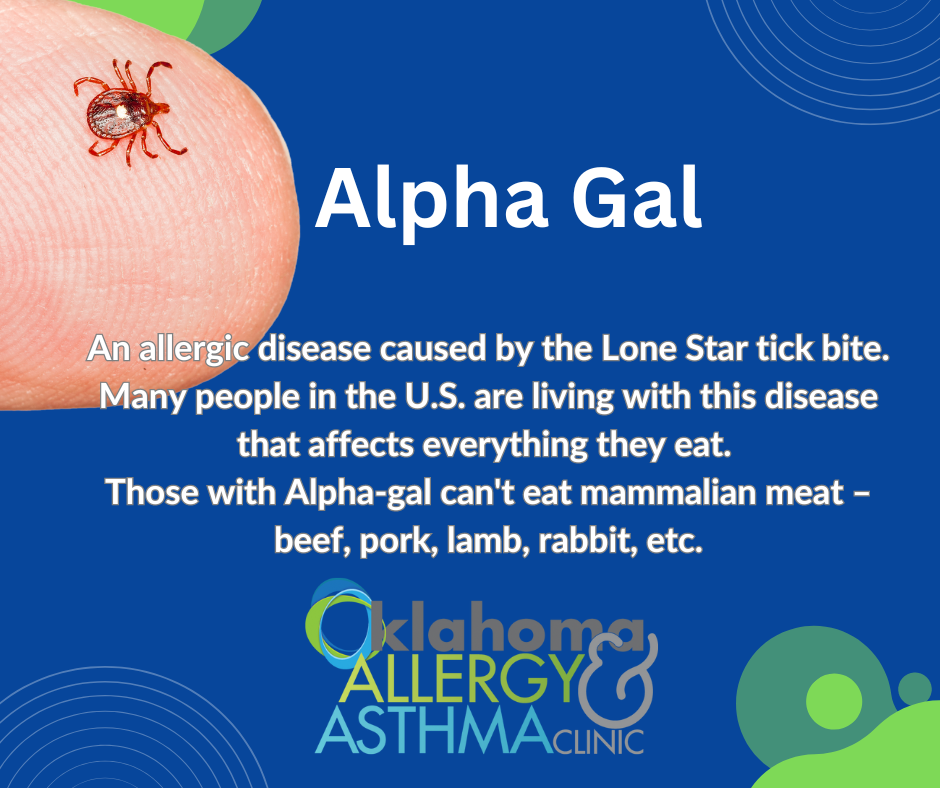
An article in Allergic Living magazine focused on the Alpha-gal allergy – an allergic disease caused by the Lone Star tick bite. However, you may be surprised at how many people are living with this disease that affects everything they eat. Those with Alpha-gal can’t eat mammalian meat – beef, pork, lamb, rabbit, etc. Turns out best-selling author, John Grisham, suffers from this disease, according to the article.

Grisham who keeps meticulous notes, found out in 2012, after working with his allergist on his case of his skin feeling like it was on fire. His hives were actually a reaction to eating mammalian meat.

According to the article, Grisham has become an old pro at managing his meat-restricted diet with the help of his wife, Renee, who also has the disease. He has learned to savor healthy alternatives to beef and pork although he regularly gets red meat cravings.

He and Renee live near Charlottesville, Virginia, while beautiful and historic, is a favorite habitat to the Lone Star tick.

There is no treatment for red meat allergy beyond avoiding the consumption of red meat and in some cases, dairy and gelatin. There is a chance this allergy may resolve over time if the affected person prevents getting another tick bite. As research advances, there is hope a better treatment of red meat allergy will be found.

“With our mild winter, ticks are out, and ready to bite,” says OAAC Board-Certified Allergist Dr. Laura Chong. “Warmer weather means we are starting to spend more time outside. Be sure and take your tick prevention precautions for you and your pets that carry them inside your house.”


The post Lone Star Tick Bite – Alpha Gal appeared first on Oklahoma Allergy and Asthma Clinic.

Previous Article Stinging Insect Allergy Can Ruin Outdoor Activities
Next Article Grass Pollen Allergy
Print
99
Terms Of UsePrivacy StatementCopyright 2026 by Oklahoma Allergy and Asthma Clinic
Back To Top