Search
× Search

Acid Reflux

Acid reflux or GERD occurs when gas, liquid or food particles in the stomach return back up the esophagus (food tube) into the back of the throat (pharynx), mouth, nose, sinuses, middle ear tube (Eustachian tube), or middle ear. This results in irritation (inflammation) and discomfort of these areas. It is important to note that patients don’t always feel the irritation and the symptoms can be ‘silent’. When this occurs, your doctor might see evidence on your physical exam or note other symptoms that are concerning for reflux.

When the reflux enters the upper airway, it is called laryngeal pharyngeal reflux or LPR. When this occurs, it is called GERD/LPR. Unfortunately, up to 60% of the population will have reflux one or more times per week.

As many as 75% of individuals with asthma are at a higher risk of experiencing acid reflux symptoms. In fact, asthmatics are twice as likely to have GERD. Many severe asthmatics have GERD that makes their asthma more challenging to treat. The stomach contents may trigger nerves associated with asthma (particularly cough) or can actually enter the airways (aspiration) resulting in spasm, irritation and asthma symptoms. For these reasons, reflux needs to be considered in individuals with asthma.

Signs and Symptoms of GERD/LPR

  • Nasal congestion and sometimes runny nose
  • Postnasal drainage
  • Cough
  • Hoarseness (particularly in the morning), throat irritation/burning
  • Unusual or bitter taste in the mouth or the back of the throat (brackish water)
  • Difficulty swallowing or choking (particularly at night)  Recurrent sore throat, pneumonia, bronchitis, sinusitis, or ear infections
  • Constant throat clearing
  • Bad breath (halitosis)
  • Burning chest pain (can mimic heart attacks)
  • Abdominal fullness, gas, or belching after meals
  • Chest pain, burning or tightness in the chest after lying down or bending over

If GERD/LPR is diagnosed, your physician may recommend using medications to help block the effects of acid secretion. Anti-acids (like Rolaids or Tums) weaken and neutralize the acid in your stomach, but don’t affect the production of acid and don’t work to prevent symptoms. H2 blockers (like Zantac or Pepcid) lessen the production of acid in your stomach and help prevent symptoms. They tend to work longer but are not quick to act so they don’t alleviate symptoms quickly. Proton Pump Inhibitors or PPIs (like Prilosec, omeprazole or Nexium) are longer acting and make acid less prevalent in the gut. They work by preventing symptoms and must be taken on an empty stomach 30 minutes prior to eating.

All medications including those for acid reflux have potential side effects and these can be discussed with your provider.

Measures That May Help Alleviate Symptoms of GERD/LPR:

  • Elevate the head of your bed 6-8 inches (This can be done by placing the top bedposts on cinder blocks or using a wedge under the top of the mattress. Elevating your head on pillows is not as effective.)  Eat smaller, more frequent meals rather than large ones.
  • No eating or drinking at least 3-4 hours before bedtime.
  • Drinking fluids of any type before bedtime can result in stretching the stomach opening resulting in reflux.
  • Do not skip meals. This can actually result in a 15% increase in daily caloric intake. Skipping meals usually result in overeating of the remaining meals, which can overfill your stomach and increase acid reflux.
  • Lose weight, if needed. We know that those who are overweight do not respond as well to GERD meds as those who are of healthy weight.
  • Avoid bending over, straining, constipation or wearing tight clothes around the abdomen.

Eliminate the following foods and beverages (totally, if all possible)

  • Caffeinated and/or decaffeinated products
  • Alcohol
  • Carbonated beverages of any type
  • Chocolate
  • Mint (includes gums and toothpaste)
  • All types of citrus
  • Fried foods (includes many spicy or fatty foods)
  • Nicotine of any type
  • Dairy

Recent News

SuperUser Account
/ Categories: News

Needle-Free Option for Severe Allergic Reactions Expanded for Use in Children
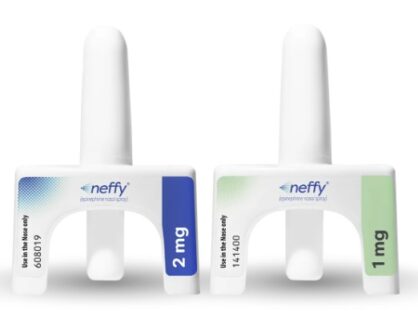
Doctors at the Oklahoma Allergy and Asthma Clinic call the FDA approval a game-changer

Parents now have a needle-free, life-saving option should their child experience a severe allergic reaction.

The U.S. Food and Drug Administration this week approved neffy nasal spray in a one milligram dose, expanding its use to younger children. Neffy is a nasal spray for the emergency treatment of severe allergic reactions, including anaphylaxis. The FDA action means neffy may now be used in children ages four years or older, weighing between 33 and 66 pounds.

The drug was originally approved as a two-milligram dose for individuals over 66 pounds back in August of 2024.

“The approval of one milligram neffy is a game-changer for our young patients who suffer from severe allergies and asthma-related anaphylaxis,” said Dr. Maya Gharfeh, allergy and asthma specialist at the Oklahoma Allergy & Asthma Clinic. “As a physician, I’ve seen firsthand the hesitation and fear that children and parents experience when faced with the need for an epinephrine injection. With neffy, we now have a needle-free alternative that can provide the same life-saving benefits in a less intimidating way.”

Neffy provides a convenient and effective solution for managing life-threatening allergic reactions without the need for injections.

“Anaphylaxis is life-threatening, and some people, particularly children, may delay or avoid treatment due to fear of injections,” said Dr. Kelly Stone, Associate Director of the Division of Pulmonology, Allergy, and Critical Care at the FDA’s Center for Drug Evaluation and Research. “The availability of epinephrine nasal spray may reduce barriers to rapid treatment of anaphylaxis.”

According to the the Asthma and Allergy Foundation of America, anaphylaxis occurs in about one in 50 Americans and some estimates place it as high as one in 20.

“As allergy specialists, we know that some parents of small children may hesitate to use traditional epinephrine auto-injectors due to needle anxiety. Now, we have another option for them,” Gharfeh added.

Neffy is expected to be available in the United States by the end of May 2025.

For more information about the Oklahoma Allergy & Asthma Clinic, visit at www.oklahomaallergy.com or for an appointment, call 405-235-0040.

The post Needle-Free Option for Severe Allergic Reactions Expanded for Use in Children appeared first on Oklahoma Allergy and Asthma Clinic.

Previous Article Not a Cold. Not the Flu. It’s Cedar Fever! Who Knew?
Next Article Important Recall Notice for AIRSUPRA Inhalation Aerosol
Print
137
Terms Of UsePrivacy StatementCopyright 2026 by Oklahoma Allergy and Asthma Clinic
Back To Top