Search
× Search

Nickel Allergy

Nickel allergy is a very common form of Allergic Contact Dermatitis (ACD). A rash develops after contact with nickel and may have the following characteristic(s): redness, itching, swelling, hives and/or cracks.

Nickel Allergy

Piercing is a major cause of nickel allergy. When the skin is injured, prolonged contact with nickel causes an allergic reaction. Nickel salts from the jewelry penetrate the skin and cause sensitization. Once an individual is sensitized to nickel, symptoms will appear after contact with nickel.

Nickel allergy is considered a delayed Type IV allergy meaning an allergic reaction may occur up to 48 hours after nickel contact.

Allergy relief

For immediate relief, your doctor may recommend a steroid cream to help reduce inflammation and redness. Nickel allergy rashes usually clear once contact with nickel is stopped. It is important to identify the source of nickel and avoid it.

How to avoid nickel

The key to avoiding nickel is to identify it before your skin does.

All metal items suspected of containing nickel may be tested with a dimethyl glyoxime test called Nickel Alert. Nickel alert quickly, safely, and easily tests jewelry and other metal items for the presence of nickel.

Where nickel is found

Nickel is frequently found in metal and metal objects including gold because it is inexpensive, durable, and lustrous.

Often when it is difficult to identify the nickel source because a rash might not appear for two days. It is critical to test all metal items since there are often multiple sources of exposure.

Commons items that may contain nickel:

  • Earrings
  • Necklaces
  • Rings
  • Bracelets
  • Costume and heirloom jewelry
  • Buttons and snaps
  • Belt buckles
  • Zippers
  • Fasteners
  • Hand tools and scissors
  • Keys and coins
  • Eyeglass frames
  • Watches and bands
  • Gold-white and yellow, especially 10 and 14 ct
  • Brass or chrome fixtures
  • Kitchen utensils—silverware
  • Bra hooks
  • Suspender clips
  • Hair pins
  • Handbags / clutches
  • Cigarette lighters
  • Jean studs
  • Razors
  • Pocket knives
  • Pens
  • Lipstick holders
  • Powder compacts
  • "Hypoallergenic and "Nickel-free" jewelry

Nickel allergy Facts

  • The most common sites for nickel allergy are earlobes, neck, and wrist where metal touches the skin. In children, one of the most common signs of nickel allergy is a rash on the central abdomen from snaps/buttons.
  • Nickel allergy can develop at any age and often last a lifetime.
  • Nickel allergy is the second most common form of allergic contact dermatitis after poison ivy, oak and sumac.
  • 15% of the women in the U.S. are nickel allergic.
  • There is no cure for nickel allergy.

Nickel-free and hypoallergenic jewelry

There are no government standards or regulations for using the terms "nickel-free" or "hypoallergenic".

Jewelry labeled "nickel-free" or "hypoallergenic" often refers only to the plating. The base metal may contain nickel. Once the plating wears thin, even microscopically, nickel salts will come in contact with your skin and symptoms can occur.

Expensive jewelry may contain nickel in the base metal.

Test your jewelry regularly, even the "safe" items, using the dimethyl glyoxime test – Nickel Alert.

Metals that often contain nickel

  • Gold-white and yellow
  • Silver, sterling silver, silver plate
  • Palladium
  • Chrome (or Chromate)
  • Cobalt

Suitable replacements for nickel

  • Aluminum
  • Titanium
  • Platinum
  • Plastic
  • Wood

When avoidance of nickel is not possible

Avoiding nickel is ideal, but not always possible. When avoidance of nickel is not possible, coat the metal that contacts your skin (jean studs, eyeglass frames, etc.) with a clear coating. Avoid generic nail polishes; they often contain toluene, formaldehyde and dibutyl phthalate which can lead to further sensitization for nickel allergic individuals. Use Nickel Guard as a safe alternative. Also, if possible, wear protective clothing (gloves, long sleeves, etc.) for larger areas.

Additional considerations

  • Weather: In summer, perspiration aids the transfer of nickel salts to the skin, increasing symptoms.
  • Diet: Severely allergic individuals may choose to avoid foods which are rich in nickel. Dietary intake of some foods has been shown to aggravate dermatitis, especially hand dermatitis. Your doctor may instruct you to avoid some foods which typically contain higher amounts of nickel, including asparagus, chocolate, peanuts, beans, peas, rhubarb, cabbage, oysters, spinach, herring, tea, mushrooms, whole meal flour, pears, sprouts, corn, raisins, onions, tomatoes, and baking powder.
  • Medical: Tell your physician that your are nickel allergic. Verify all dental appliances and surgical implants are nickel-free prior to implantation.
  • Work: For specific occupational sources of nickel, visit www.athenaallergy.com

Easily avoid nickel with Nickel Solution featuring Nickel Alert and Nickel guard.

You may order Nickel solution via:
Web: www.nickelsolution.com
Phone: (704) 947-1917
FAX: (857) 588-8765
Mail: PO Box 1294
Huntersville, NC 28070

Recent News

SuperUser Account
/ Categories: News

Important Recall Notice for AIRSUPRA Inhalation Aerosol
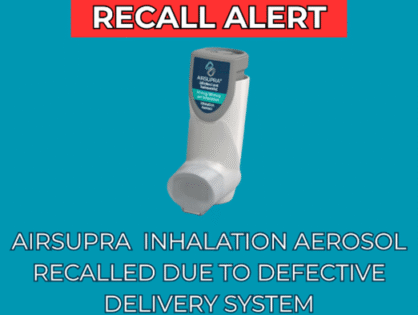
AstraZeneca Pharmaceuticals LP, the maker of the inhalation medication AIRSUPRA® (albuterol and budesonide) aerosol, has initiated a voluntary recall for their product. This recall is effective immediately and involves multiple product lots. The recalled inhalers might not work properly.

Reason for Recall:

A defect in the delivery system of these inhalers has been identified, which may hinder the proper administration of the medication needed for effective asthma control.

Product Details:

Product Name: AIRSUPRA (albuterol and budesonide) inhalation aerosol 

Strength: 90 mcg/80 mcg per inhalation 

Packaging Types:

120-inhalation canister (NDC 0310-9080-12) 

 28-inhalation canister (NDC 0310-9080-28) 

Recall Number:  D-0444-2025 

Affected Lot Numbers:

For 120-inhalation canisters: Lots: 6270044C00, 6270040D00, 6270034E00, Exp Date 10/2026; 6270053C00, 6270045C00, 6270047C00, 6270056C00, 6270052C00, 6270063E00 Exp 11/30/2026; 6270064C00, 6270071D00, 6270075D00, 6270075F00 Exp Date 12/31/2026; 6270107C00, Exp Date 9/30/2027  

For 28-inhalation canisters: Lot 6270019E00, Exp Date 7/31/2025; 6270021D00, Exp 8/31/2025; 6270095C00, Exp 2/28/2026

Rx only, Manufactured for: AstraZeneca Pharmaceuticals LP, Wilmington, DE 19850, By: AstraZeneca Dunkerque Production (AZDP), Dunkerque, France, Product of France

What You Should Do:

Patients and users are advised not to use the inhalers associated with the affected lots. Please contact your pharmacy or healthcare provider as soon as possible to discuss alternative treatment options. Contact the dispensing pharmacy or AstraZeneca for return processing information.

If you are a current patient of the Oklahoma Allergy and Asthma Clinic affected by this recall, please give us a call at 405-235-0040.  

Recall Contact Information:

For product questions, to report an adverse event or side effect, or to report a product quality issue, you can contact the AstraZeneca Information Center by phone at:

1-800-236-9933 (M-F, 8AM-6PM ET, excluding holidays)

Or you can report a product quality issue online: https://contactazmedical.astrazeneca.com/content/astrazeneca-champion/global/en/amp-form.html

For more information on this recall, please visit: https://www.accessdata.fda.gov/scripts/ires/?Event=96857

The post Important Recall Notice for AIRSUPRA Inhalation Aerosol appeared first on Oklahoma Allergy and Asthma Clinic.

Previous Article Needle-Free Option for Severe Allergic Reactions Expanded for Use in Children
Next Article Main Clinic Update
Print
327
Terms Of UsePrivacy StatementCopyright 2026 by Oklahoma Allergy and Asthma Clinic
Back To Top