Study finds connection between air pollution and childhood peanut allergies
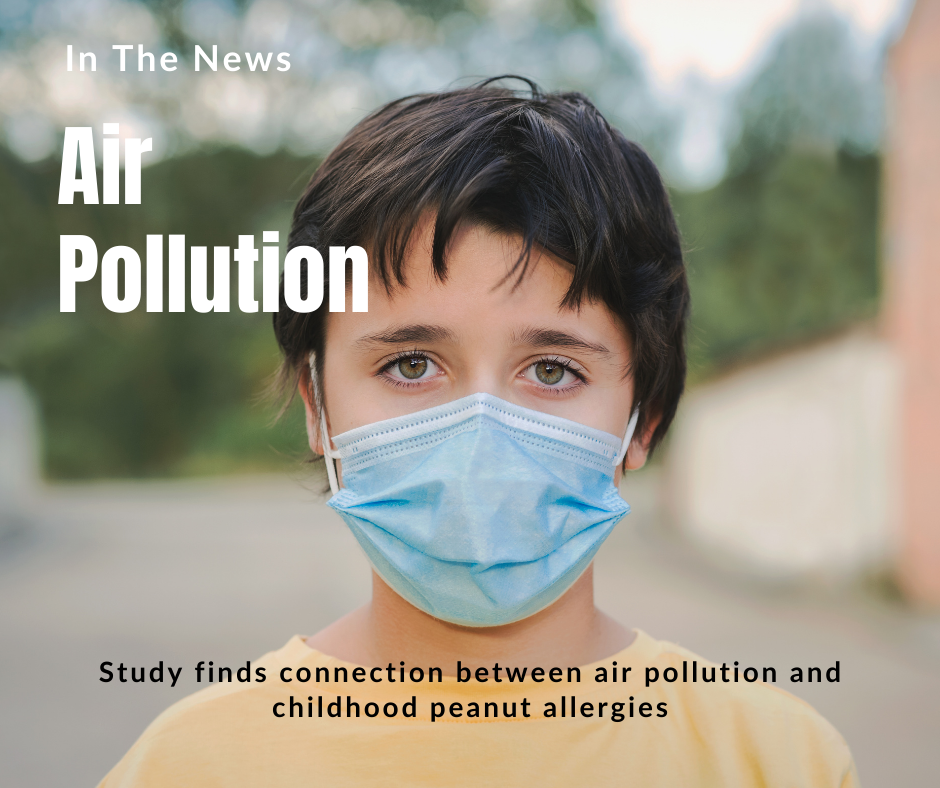
Exposure to higher levels of air pollution as a baby is linked to having a peanut allergy throughout childhood, according to a new study. And policies aimed at tackling poor air quality could potentially reduce the prevalence and persistence of peanut allergies, it stated.
The research, led by Murdoch Children’s Research Institute (MCRI) and the University of Melbourne, found being exposed to higher levels of air pollution from infancy was associated with increased odds of developing a peanut allergy and having the allergy persist across the first 10 years of life. However, the same association was not seen for egg allergy or eczema.
Published in the Journal of Allergy and Clinical Immunology, the study is the first to explore the link between air pollution and challenge-proven food allergy over the first decade of life.
The research involved 5,276 children in Melbourne from the HealthNuts study, recruited at age one and followed-up at four, six and 10 years. The research team used estimates of the annual average concentration of fine particulate matter (PM2.5) and nitrogen dioxide (NO2) at each participant’s residential address at the time of each follow up.
MCRI Associate Professor Rachel Peters said the study found that higher levels of air pollution was a risk factor for the development and persistence of peanut allergies. And this was despite Melbourne having generally good air quality compared to our international counterparts, she said.
“The rise in allergy prevalence has occurred at a similar time to increased urbanization, leading to the belief that environmental factors may be contributing to high allergy rates.
Eczema and food allergy most often develop in infancy. Both immune conditions can naturally resolve over time, but for some they can persist throughout adolescence and into adulthood.”
This is the first study to use an oral food challenge, the gold-standard of food allergy diagnosis, to investigate the relationship between food allergy and air pollution.” Rachel Peters, MCRI Associate Professor
University of Melbourne’s Dr. Diego Lopez said the co-exposure of peanut allergens in the environment and air pollutants could be increasing the allergy risk.
“Air pollutants have an irritant and inflammatory effect that may boost the immune systems pro-allergic response, potentially triggering the development of food allergies,” he said.
“However, the underlying mechanisms of how air pollution increases the risk of a peanut allergy, and why eczema and egg allergy aren’t impacted in the same way, need to be explored further.”
Allergic disease is one of Australia’s greatest public health challenges, with one in 10 developing a food allergy in their first year of life.
Associate Professor Peters said policies aimed at tackling air pollution could potentially reduce the development and persistence of peanut allergy.
“The research highlights the importance of early-life interventions aimed at reducing exposure to air pollution, which could potentially prevent peanut allergies and other poor child health outcomes,” she said.
“Improving city design to support greater air quality regulation, better promoting public transport and switching to non-combustion fuels may help turn the tide on peanut allergy.”
Mae, 8, was diagnosed with peanut, diary and egg allergies at 8 months old after an allergic reaction saw her breakout in hives across her entire body. She has since gone onto have several anaphylaxis reactions.
Her mum, Eleanor Jenkin, said the most severe episode occurred five years ago during a food challenge at The Royal Children’s Hospital to check Mae’s tolerance for adding egg back into her diet.
“She was eating cupcakes as part of the challenge until she started to refuse to eat anymore,” she said. We thought she was just being fussy, but she began vomiting and lost consciousness. It was her first anaphylaxis and while it was scary, she returned to her normal self a few minutes after being given an adrenaline shot.”
Since then, Mae has carried an EpiPen with her at all times.
“We were hopeful she would grow out of the food allergies but now we have come to accept that Mae will be living with serious and ongoing allergies,” Eleanor said.
“Her allergies are always going to be in the back of her mind, influencing the decisions that she makes every time she eats at a restaurant, orders takeaway or goes to a birthday party. As a family we are learning to manage this new normal as best we can.”
Living in Melbourne’s west, Eleanor said the new MCRI research showed why it was important to tackle air pollution.
“There is a whole suite of reasons why we should be addressing air pollution and its link with peanut allergy just adds to that,” she said.
“Multiple factors are behind the allergy epidemic and if higher levels of air pollution are impacting the prevalence and persistence then that’s an important discovery for families.
“We want to see the quality of life improve for children living with allergies as well as fewer children having to go through what Mae has experienced. The more we know about how to prevent allergies the better.”
The GenV study, tracking the health and wellbeing of Victorians from birth to old age, is also starting to look at the impact of air pollution and climate change on children’s health. GenV has gathered data from more than 120,000 participants, including 48,000 babies.
MCRI researchers are linking information on heat vulnerability with perinatal and child health data from the GenV cohort and are seeking to include temperature extremes and climate related disaster evidence in the future.
Associate Professor Suzanne Mavoa said this would improve our understanding of how climate change impacts the health of children and families, identify those most at risk and test policies and interventions to better protect against severe weather events.
Associate Professor Peters is the National Allergy Centre of Excellence (NACE) Epidemiology Lead and a Centre for Food Allergy Research (CFAR) Associate Investigator. Eleanor is also a member of the NACE Consumer Advisory Group. Both national research bodies are hosted at MCRI to help accelerate allergic disease research across Australia.
Researchers from Monash University, The University of Sydney, Sydney Local Health District, The Royal Children’s Hospital, University of Queensland, Deakin University and the Environment Protection Authority Victoria also contributed to the findings.
Source:
Murdoch Childrens Research Institute
Journal reference:
Lopez, D. J., et al. (2024) Early life air pollution is associated with persistent peanut, but not egg allergy, across the first ten years. Journal of Allergy and Clinical Immunology: In Practice. doi.org/10.1016/j.jaci.2024.08.018.
The post Study finds connection between air pollution and childhood peanut allergies appeared first on Oklahoma Allergy and Asthma Clinic.
996