Search
× Search

Peak Flow Monitoring

What is peak flow?

Peak flow is the measurement of how effectively air moves out of your lungs . A peak flow meter monitors your asthma the way a blood pressure cuff monitors your blood pressure. Measuring peak flow helps determine any narrowing in your airways before you have an actual attack. This allows you to take your medicine before a serious attack develops.

Why is peak flow monitoring so important?

Peak flow monitoring allows you and your doctor to manage your condition effectively. It gives an accurate picture of your condition that allows your doctor to make appropriate decisions regarding the effectiveness of your medicine plan and treatment plan .

Other benefits of peak flow monitoring include the following:

  • Helps you decide whether your condition is serious enough to seek emergency treatment.
  • Allows you to detect early stages of airway obstruction to start immediate treatment.
  • Gives you an accurate picture of the variations in your condition over a 24- hour period. This permits your doctor to prescribe treatment when you need it the most.
  • Helps you differentiate between airway obstruction and other causes of breathlessness like hyperventilation.
  • Allows you to ascertain specific allergens, irritants, or workplace exposures that may cause your symptoms to develop.
  • Enables you to communicate more effectively with your doctor so that he or she can provide guidance over the phone if needed.
  • May be an effective detector to monitor whether your asthma symptoms have stabilized, improved, or deteriorated/worsened.

How do I start?

Most adults and young children can use a peak flow meter.

All it requires is a short, hard blow of air into the meter. Here's how to use the peak flow meter :

  • Place the indicator at the base of the numbered scale.
  • Sit upright or stand up.
  • Take a deep breath .
  • Place the meter in your mouth and close your lips around the mouthpiece. Be sure not to put your tongue in the hole.
  • Blow out as hard and fast as you can.
  • Write down the number that you get.
  • Repeat the above steps two more times.
  • Write down the highest of the three numbers in your asthma diary.

What is the "Three Zone" system?

You need to find your personal best peak flow number. This is the highest number that you can attain over a 2-week period when you feel good and do not have any asthma symptoms. These measurements should be taken when you wake up and in the evening. They should also be taken before and after taking an inhaled medication , if you use one. Keep an accurate record of these readings so that you can discuss them with your doctor.

Peak flow numbers have been put into zones that are set up like a traffic light. Using your personal best peak flow number, you can determine what zone the reading falls in and respond with the appropriate treatment.

For example:
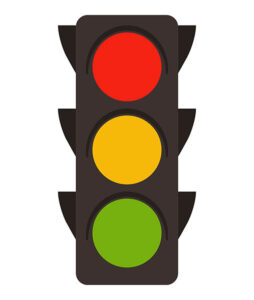
traffic signal with red, yellow, and green lights

GREEN ZONE (80% to 100% of your personal
best number)

The green zone signals all clear. No asthma symptoms are present and you can take your medications as you have been doing.

YELLOW ZONE (50% to 8O% of your personal best number)

The yellow zone signals caution. You may be having an asthma attack that requires an increase in medication, or your doctor may need to change your treatment plan because your asthma is not under control.

RED ZONE (below 50% of your
personal best number)

The red zone signals a medical alert. You should first take your short-acting bronchodilator immediately and then contact your doctor right away.

Be sure to talk to your doctor regarding peak flow monitoring. Your particular zones should be established based on your individual condition.

How do I keep track of my peak flow readings?

It is important to keep a daily diary of your peak flow readings so that you and your doctor can better evaluate your treatment plan . This information can help you to effectively control your condition and lead a more active, healthy life.

Recent News

SuperUser Account
/ Categories: News

Asthma Facts and Figures

Asthma Facts and Figures from the Asthma and Allergy Foundation of America (aafa.org)

May is Allergy and Asthma Awareness Month

What Is Asthma?

  • Asthma is a long-term disease that causes inflammation and swelling of the airways. This results in narrowing of the airways that carry air from the nose and mouth to the lungs.
  • Asthma symptoms include trouble breathing (shortness of breath), wheezing, coughing, and tightness or pain in the chest.
  • Asthma symptoms can be triggered by different things for different people. Allergens, like dust or pet dander, are common triggers. Some people also develop asthma symptoms in response to certain foods or to exercise.

    Asthma can be deadly.

  • There is no cure for asthma, but appropriate treatment prevents asthma attacks and can help you have a better quality of life.
  • Asthma is one of the most common and costly diseases in the United States.

    How Common Is Asthma?

  •  Approximately 25 million people in the U.S. have asthma. This equals about 1 in 13 people.
  • About 20 million U.S. adults age 18 and older have asthma.
  • Asthma rates are highest in Black adults in the U.S.
  • Asthma is more common in female adults than male adults. Around 9.8% of female adults have asthma, compared to 6.1% of male adults.
  • It is a leading chronic disease in children.2 Currently, there are about 5.1 million children under the age of 18 with asthma.
  • Black children are nearly three times more likely to have asthma compared to white children.
  • Asthma is more common in male children than female children. Around 8.4% of male children have asthma, compared to 5.5% of female children.

What Are the Rates of Asthma Attacks in Children?

  • In 2019, 44.3% of children age 18 and younger who had asthma reported having one or more asthma attacks in the past year.
    • About 47.2% of children under the age of 5 with asthma had an attack. 1
  • According to the Centers for Disease Control and Prevention (CDC), asthma attacks in children have declined from 2001 through 2019.
  • Even though asthma is controllable, it is estimated that 50% of children with asthma have uncontrolled asthma.

What Are the Rates of Asthma Attacks in Adults?

  • In 2019, 40.4% of adults age 18 and older who had asthma reported having one or more asthma attacks in the past year.
    • Black adults have the highest rate of asthma attacks in the U.S.
  • According to the CDC, asthma attacks in adults have declined from 2001 through 2019.3 2

How Many People Seek Medical Care for Asthma?

  • In 2018, asthma accounted for 5.8 million doctors’ office visits.
  • In 2018, asthma accounted for 178,530 discharges from hospital inpatient care and 1.6 million emergency department visits.
  • Black people in the U.S. are nearly five times more likely than white people in the U.S. to visit the emergency department due to asthma.

How Many People Die From Asthma?

  • On average, 11 people in the U.S. die from asthma each day. In 2020, 4,145 people died from asthma. Nearly all of these deaths are avoidable with the right treatment and care. In 2020, deaths due to asthma rose for the first time in 20 years.
  • Adults are five times more likely to die from asthma than children.
  • Female adults are more likely to die from asthma than male adults, and male children are more likely than female children.
  • Black people in the U.S. are nearly three times more likely to die from asthma than white people in the U.S.
  • When sex is factored in, Black females have the highest rate of fatality due to asthma. In 2020, Black females were nearly four times more likely to die from asthma than white males.

What Are the Costs of Asthma?

  • From 2008-2013, the annual economic cost of asthma was more than $81.9 billion – including medical costs and loss of work and school days:9 o $3 billion in losses due to missed work and school days
    • $29 billion due to asthma-related mortality o $50.3 billion in medical costs
  • Medical costs for people with asthma are estimated to be $3,266 higher per year (in 2015 U.S. dollars) compared to medical costs for people without asthma.
  • Among children ages 5 to 17, asthma is one of the top causes of missed school days. In 2013, it accounted for more than 13.8 million missed school days.

Why Do Certain Racial or Ethnic Groups Have Higher Rates of Asthma,Asthma Attacks, or Asthma Deaths?

See AAFA’s groundbreaking research report on Asthma Disparities in America. Racial and ethnic differences in asthma frequency, illness, and death are caused by complex factors, including:

  • Structural determinants such as systemic racism, segregation, and discriminatory policies
  • Social determinants such as socioeconomic status, education, neighborhood and physical environment, employment, social support networks, and access to health care
  • Biological determinants such as genes and ancestry
  • Behavioral determinants such as tobacco use and adherence to medicines
  • Social determinants and structural inequities (systemic racism) largely drive disparities in asthma. Factors such as genetics and individual behaviors contribute less to asthma disparities.

Why Do Males and Females Have Different Rates of Asthma?

  • Male children are more likely to have asthma than female children. This trend reverses in adulthood, where female adults are more likely to have asthma than male adults.
  • Some studies suggest this trend reverses because of the effects of testosterone on lung cells. Testosterone, a male sex hormone, has been found to decrease the swelling of the airways in asthma.

The post Asthma Facts and Figures appeared first on Oklahoma Allergy and Asthma Clinic.

Previous Article Facts and Figures about Allergies
Next Article OAAC serving Oklahomans since 1925
Print
109
Terms Of UsePrivacy StatementCopyright 2026 by Oklahoma Allergy and Asthma Clinic
Back To Top