Search
× Search

Peak Flow Monitoring

What is peak flow?

Peak flow is the measurement of how effectively air moves out of your lungs . A peak flow meter monitors your asthma the way a blood pressure cuff monitors your blood pressure. Measuring peak flow helps determine any narrowing in your airways before you have an actual attack. This allows you to take your medicine before a serious attack develops.

Why is peak flow monitoring so important?

Peak flow monitoring allows you and your doctor to manage your condition effectively. It gives an accurate picture of your condition that allows your doctor to make appropriate decisions regarding the effectiveness of your medicine plan and treatment plan .

Other benefits of peak flow monitoring include the following:

  • Helps you decide whether your condition is serious enough to seek emergency treatment.
  • Allows you to detect early stages of airway obstruction to start immediate treatment.
  • Gives you an accurate picture of the variations in your condition over a 24- hour period. This permits your doctor to prescribe treatment when you need it the most.
  • Helps you differentiate between airway obstruction and other causes of breathlessness like hyperventilation.
  • Allows you to ascertain specific allergens, irritants, or workplace exposures that may cause your symptoms to develop.
  • Enables you to communicate more effectively with your doctor so that he or she can provide guidance over the phone if needed.
  • May be an effective detector to monitor whether your asthma symptoms have stabilized, improved, or deteriorated/worsened.

How do I start?

Most adults and young children can use a peak flow meter.

All it requires is a short, hard blow of air into the meter. Here's how to use the peak flow meter :

  • Place the indicator at the base of the numbered scale.
  • Sit upright or stand up.
  • Take a deep breath .
  • Place the meter in your mouth and close your lips around the mouthpiece. Be sure not to put your tongue in the hole.
  • Blow out as hard and fast as you can.
  • Write down the number that you get.
  • Repeat the above steps two more times.
  • Write down the highest of the three numbers in your asthma diary.

What is the "Three Zone" system?

You need to find your personal best peak flow number. This is the highest number that you can attain over a 2-week period when you feel good and do not have any asthma symptoms. These measurements should be taken when you wake up and in the evening. They should also be taken before and after taking an inhaled medication , if you use one. Keep an accurate record of these readings so that you can discuss them with your doctor.

Peak flow numbers have been put into zones that are set up like a traffic light. Using your personal best peak flow number, you can determine what zone the reading falls in and respond with the appropriate treatment.

For example:
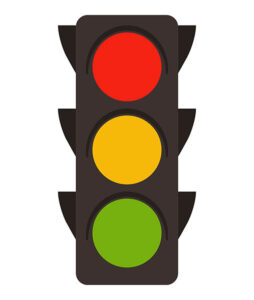
traffic signal with red, yellow, and green lights

GREEN ZONE (80% to 100% of your personal
best number)

The green zone signals all clear. No asthma symptoms are present and you can take your medications as you have been doing.

YELLOW ZONE (50% to 8O% of your personal best number)

The yellow zone signals caution. You may be having an asthma attack that requires an increase in medication, or your doctor may need to change your treatment plan because your asthma is not under control.

RED ZONE (below 50% of your
personal best number)

The red zone signals a medical alert. You should first take your short-acting bronchodilator immediately and then contact your doctor right away.

Be sure to talk to your doctor regarding peak flow monitoring. Your particular zones should be established based on your individual condition.

How do I keep track of my peak flow readings?

It is important to keep a daily diary of your peak flow readings so that you and your doctor can better evaluate your treatment plan . This information can help you to effectively control your condition and lead a more active, healthy life.

Recent News

SuperUser Account
/ Categories: News

Food Allergy Facts and Figures – From Kids with Food Allergies and the Asthma and Allergy Foundation of America

May is Asthma and Allergy Awareness Month

What Is a Food Allergy?

  • A food allergy occurs when the body’s immune system sees a certain food as harmful and reacts by causing symptoms. This is an allergic reaction.
  • Foods that cause allergic reactions are called allergens.
  • Allergic reactions can involve the skin, mouth, eyes, lungs, heart, gut, and brain.
  • Mild and severe symptoms can lead to a serious allergic reaction called anaphylaxis [anna-fih-LACK-sis]. This reaction usually involves more than one part of the body and can worsen quickly.
  • Anaphylaxis must be treated right away with epinephrine to provide the best chance for improvement and prevent serious, potentially life-threatening complications.

How Common Are Food Allergies?

  • As of 2021, about 20 million people have food allergies in the U.S.
    • About 16 million (6.2%) U.S. adults have food allergies.
    • About 4 million (5.8%) U.S. children have food allergies.
  • In 2021, 7.6% of non-Hispanic Black children had food allergies, compared to 5.5% of non-Hispanic white children.
    • Food allergy has increased among U.S. children over the past 20 years, with the greatest increase in Black children.
  • Children with food allergies are two to four times more likely to have asthma or other allergic diseases.

What Are the Most Frequent Food Allergens?

  • Nine foods cause most food allergy reactions in the United States:

 o Milk

o Egg

o Peanut

o Tree nut (for example, almonds, walnut, pecans, cashews, pistachios)

o Wheat

o Sesame

o Soy

o Fish (for example, bass, flounder, cod)

o Shellfish (for example, crab, shrimp, scallop, clams)

  • Sesame is a rising food allergy. It impacts an estimated 1 million people in the United States.6 It was declared a major allergen in the United States in 2021.

What Is Anaphylaxis?

  • Anaphylaxis is a severe, potentially life-threatening allergic reaction. Not all allergic reactions are anaphylaxis.
  • Symptoms of anaphylaxis usually involve more than one part of the body such as the skin, mouth, eyes, lungs, heart, gut, and brain.
  • Symptoms of anaphylaxis can include:
    • Skin: hives (often very itchy), flushed skin, or rash
    • Mouth: swelling of the lips, tongue, and throat; tingling or itchy feeling in the mouth
    • Lungs: shortness of breath, trouble breathing, coughing, or wheezing o Heart: dizziness, lightheadedness, loss of consciousness, low blood pressure, shock o Stomach: cramps, vomiting, diarrhea
  • Each year in the U.S., it is estimated that anaphylaxis to food results in 90,000 emergency room visits.
    • From 2006-2015, emergency room visits from food-induced anaphylaxis in infants and toddlers more than doubled

How Are Food Allergies Managed and Treated?

  • Although new treatments are being developed, there is currently no cure for food allergies.
  • Not eating the food allergen is the primary way to prevent a reaction.
  • People with food allergies should carefully read food ingredient labels and always ask about ingredients before eating food prepared by other people.
  • Epinephrine is the first line of treatment for anaphylaxis.
  • People with food allergies should always have epinephrine with them.
  • If a person is having anaphylaxis, they should:
    • Follow their Anaphylaxis Action Plan
    •  Use their epinephrine
    •  Get emergency medical care to ensure symptoms resolve

 Are Food Allergies Outgrown?

  • Milk, egg, wheat, and soy allergies are often outgrown. Most people do not outgrow peanut, tree nut, fish, and shellfish allergies.

The post Food Allergy Facts and Figures – From Kids with Food Allergies and the Asthma and Allergy Foundation of America appeared first on Oklahoma Allergy and Asthma Clinic.

Previous Article OAAC does not Renew Lease for Midwest City Satellite Clinic
Next Article Facts and Figures about Allergies
Print
104
Terms Of UsePrivacy StatementCopyright 2026 by Oklahoma Allergy and Asthma Clinic
Back To Top