Peak Flow Monitoring
What is peak flow?
Peak flow is the measurement of how effectively air moves out of your lungs . A peak flow meter monitors your asthma the way a blood pressure cuff monitors your blood pressure. Measuring peak flow helps determine any narrowing in your airways before you have an actual attack. This allows you to take your medicine before a serious attack develops.
Why is peak flow monitoring so important?
Peak flow monitoring allows you and your doctor to manage your condition effectively. It gives an accurate picture of your condition that allows your doctor to make appropriate decisions regarding the effectiveness of your medicine plan and treatment plan .
Other benefits of peak flow monitoring include the following:
- Helps you decide whether your condition is serious enough to seek emergency treatment.
- Allows you to detect early stages of airway obstruction to start immediate treatment.
- Gives you an accurate picture of the variations in your condition over a 24- hour period. This permits your doctor to prescribe treatment when you need it the most.
- Helps you differentiate between airway obstruction and other causes of breathlessness like hyperventilation.
- Allows you to ascertain specific allergens, irritants, or workplace exposures that may cause your symptoms to develop.
- Enables you to communicate more effectively with your doctor so that he or she can provide guidance over the phone if needed.
- May be an effective detector to monitor whether your asthma symptoms have stabilized, improved, or deteriorated/worsened.
How do I start?
Most adults and young children can use a peak flow meter.
All it requires is a short, hard blow of air into the meter. Here's how to use the peak flow meter :
- Place the indicator at the base of the numbered scale.
- Sit upright or stand up.
- Take a deep breath .
- Place the meter in your mouth and close your lips around the mouthpiece. Be sure not to put your tongue in the hole.
- Blow out as hard and fast as you can.
- Write down the number that you get.
- Repeat the above steps two more times.
- Write down the highest of the three numbers in your asthma diary.
What is the "Three Zone" system?
You need to find your personal best peak flow number. This is the highest number that you can attain over a 2-week period when you feel good and do not have any asthma symptoms. These measurements should be taken when you wake up and in the evening. They should also be taken before and after taking an inhaled medication , if you use one. Keep an accurate record of these readings so that you can discuss them with your doctor.
Peak flow numbers have been put into zones that are set up like a traffic light. Using your personal best peak flow number, you can determine what zone the reading falls in and respond with the appropriate treatment.
For example:
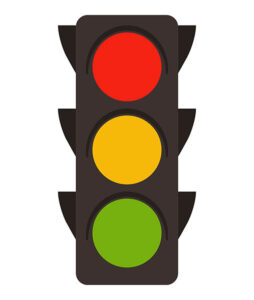
GREEN ZONE (80% to 100% of your personal
best number)
The green zone signals all clear. No asthma symptoms are present and you can take your medications as you have been doing.
YELLOW ZONE (50% to 8O% of your personal best number)
The yellow zone signals caution. You may be having an asthma attack that requires an increase in medication, or your doctor may need to change your treatment plan because your asthma is not under control.
RED ZONE (below 50% of your
personal best number)
The red zone signals a medical alert. You should first take your short-acting bronchodilator immediately and then contact your doctor right away.
Be sure to talk to your doctor regarding peak flow monitoring. Your particular zones should be established based on your individual condition.
How do I keep track of my peak flow readings?
It is important to keep a daily diary of your peak flow readings so that you and your doctor can better evaluate your treatment plan . This information can help you to effectively control your condition and lead a more active, healthy life.