
Are Bradford Pear Trees a Spring Allergy Trigger in Oklahoma?
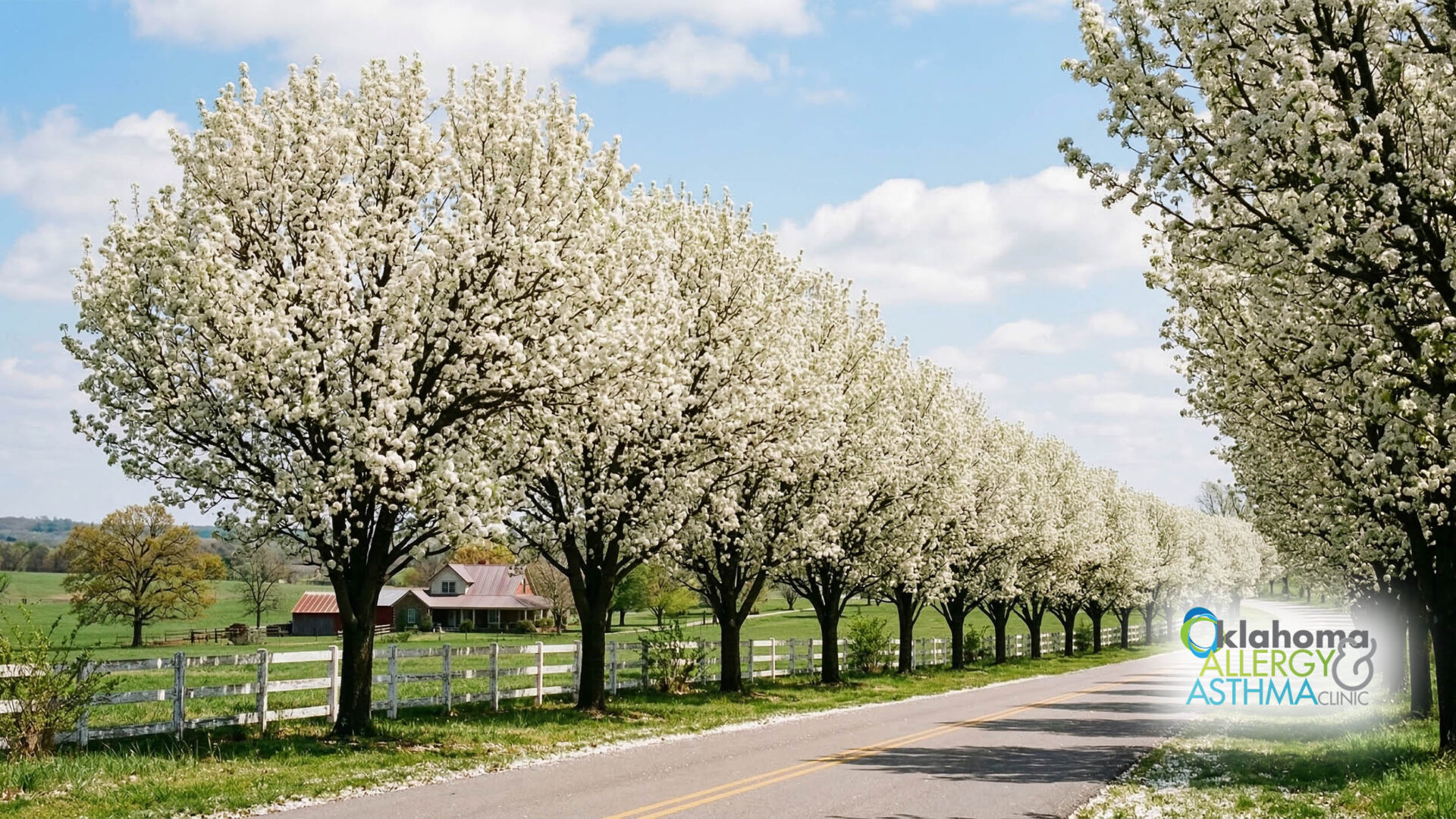
Every spring across Oklahoma, Bradford pear trees burst into bloom with bright white flowers—and an unmistakable smell. Around the same time, many people begin experiencing sneezing, congestion, headaches, and itchy throats.
It’s easy to connect the two. But despite their reputation, Bradford pear trees are rarely the true cause of spring allergies.
Let’s break down what’s really happening—and which trees are more likely responsible for your seasonal allergy symptoms.
Do Bradford Pear Trees Trigger Hay Fever?
Bradford pear trees (Pyrus calleryana), a type of Callery pear, do produce pollen, but it behaves very differently from allergy‑triggering pollen.
Bradford pear tree pollen is heavy and sticky, designed to cling to insects for pollination rather than travel through the air. Because it doesn’t become airborne, Bradford pear pollen rarely enters the respiratory system and typically does not trigger a true allergic (histamine) response.
So. while these trees bloom at the same time allergy symptoms appear, they are usually not the main culprit.
Why do bradford pear trees make you feel sick?
Although they don’t usually cause allergies, Bradford pear trees are infamous for their strong, unpleasant odor.
That smell comes from chemical compounds called amines, specifically trimethylamine and dimethylamine. When inhaled, these chemicals can act as powerful irritants, causing physical reactions that feel like allergies—even though the immune system isn’t involved.
Common Reactions to Bradford Pear Tree Odor
Non‑Allergic Rhinitis
The most common reaction is irritation of the trigeminal nerve in the nose. Your body responds by inflaming the nasal passages and producing excess mucus to flush out the irritant.
Symptoms may include:
- Sneezing
- Runny or stuffy nose
- Scratchy or irritated throat
Because this is an irritant response rather than an allergic one, antihistamines often don’t provide much relief.
Headaches and Migraines
Strong odors are a well‑known trigger for headaches. The olfactory nerve, which processes smell, is closely connected to pain pathways in the brain.
For people sensitive to strong scents or prone to migraines, exposure to blooming Bradford pear trees can cause rapid‑onset tension headaches or migraine episodes.
Respiratory Irritation
For individuals with asthma or sensitive airways, inhaling strong chemical odors can irritate the lungs and bronchial tubes. This may lead to coughing, chest tightness, or worsening respiratory symptoms—even without airborne pollen exposure.
What to Do?
Keep an eye on our daily pollen counts. Oklahoma Allergy & Asthma Clinic posts these daily, every Monday through Friday. If you are weary of that itchy, runny nose, sneezing and other allergy symptoms, schedule an appointment with one of our skilled allergists. Oklahoma Allergy & Asthma has been helping people just like you learn what triggers those allergic reactions, and then create a plan individualized for you to help keep allergy symptoms at bay. Reach out NOW, we are currently accepting new patients. Call today at (405) 235-0040 or visit oklahomaallergy.com